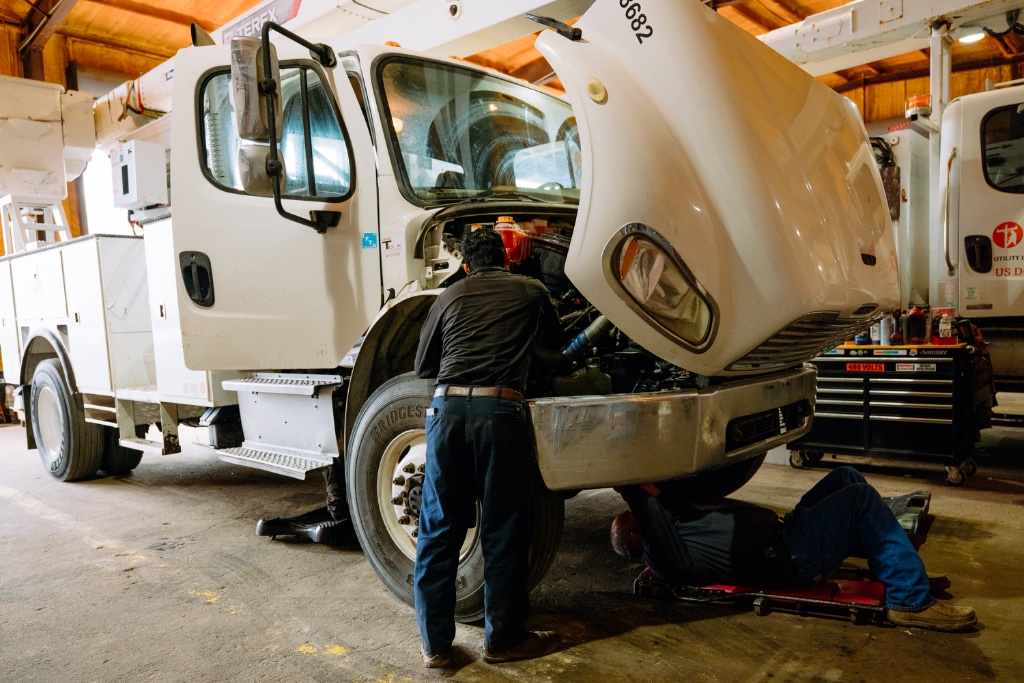
Fleet Management Solutions for Utility, Telecommunications & Infrastructure Contractors
Helping contractors maximize fleet uptime through preventive maintenance, inspections, repairs, rentals, and long-term equipment lifecycle strategies.
The Foundation
What Is Fleet Management?
Fleet management is the systematic coordination of equipment acquisition, maintenance, inspection, repair, and lifecycle planning that keeps utility, telecommunications, and infrastructure contractors productive. It is the operational discipline that turns a collection of vehicles and equipment into a reliable, available, and compliant fleet.
The goals of fleet management are operational efficiency, safety, equipment reliability, maintenance planning, lifecycle management, and compliance — all working together to protect contractor productivity and profitability. When equipment is available when projects need it, crews stay productive, deadlines stay on track, and repair costs stay predictable.
For utility and infrastructure contractors, fleet management covers everything from preventive maintenance scheduling to compliance inspections, from hydraulic repair to equipment rentals that bridge downtime. It is the framework that ensures every piece of equipment is ready when the next project starts.
Operational Efficiency
Maximize equipment availability
Safety
Compliant, inspected equipment
Equipment Reliability
Predictable, dependable performance
Maintenance Planning
Scheduled, documented service
Lifecycle Management
Acquisition to disposal
Compliance
ANSI, DOT, dielectric standards
Fleet Management Topics
Explore Fleet Management Topics
Navigate the core areas of fleet management — each connects to detailed guides, services, and resources.
The Business Case
Why Fleet Management Matters
Fleet management is not an overhead cost — it is the operational discipline that protects contractor revenue. Every hour of equipment uptime is an hour of productive work; every hour of downtime is lost revenue, delayed deadlines, and idle labor.
Equipment Uptime
Maximize the hours equipment is available and operational for project work.
Reduced Downtime
Prevent the unplanned failures that idle crews and delay project completion.
Lower Operating Costs
Scheduled maintenance costs less than emergency repair and avoids secondary damage.
Longer Equipment Life
Proper maintenance extends service life and delays costly replacement.
Project Scheduling
Reliable equipment enables confident project timelines and commitments.
Employee Productivity
Available equipment keeps crews productive instead of waiting on repairs.
Safety
Inspected, maintained equipment protects operators and ground crew.
Customer Satisfaction
On-time project completion builds contractor reputation and repeat business.
The Framework
The Four Pillars of Successful Fleet Management
Every effective fleet management program rests on four operational pillars.
Preventive Maintenance
Scheduled service that prevents equipment failure before it happens — oil changes, fluid checks, component inspections, and system service performed at defined intervals.
Routine Inspections
Regular inspections that catch developing issues and maintain compliance — daily operator walk-arounds, monthly inspections, and annual ANSI inspections.
Equipment Repairs
Professional repair of mechanical, hydraulic, and electrical systems by experienced mechanics — on-site or at our service facilities.
Lifecycle Planning
Strategic planning of equipment from acquisition through replacement — tracking total cost of ownership and timing replacement for cost-effectiveness.
CRANETEC Capabilities
Fleet Management Services Offered by CRANETEC
Complete fleet management support — from preventive maintenance to emergency repair and equipment rentals.
Fleet Preventive Maintenance
Custom scheduled maintenance programs for contractor equipment fleets.
Learn MoreNeed Help Managing Your Fleet?
CRANETEC builds custom fleet management programs that keep contractor equipment reliable, compliant, and available — across multiple states.
Equipment Coverage
Equipment We Support
CRANETEC mechanics are experienced with the utility and telecommunications equipment contractors depend on.
Industry Expertise
Industries We Support
Fleet management for the industries that build, power, and connect infrastructure.
Strategic Planning
Fleet Lifecycle Management
Fleet lifecycle management is the strategic framework that governs equipment from acquisition through disposal. By planning each stage — planning, acquisition, operation, maintenance, repair, rebuild, replacement, rental, and disposal — contractors optimize total cost of ownership and keep the right equipment available at the right time.
Planning
Define fleet requirements, equipment specifications, project demands, and budget parameters before acquisition.
Acquisition
Purchase, lease, or rent equipment to meet project and operational requirements.
Operation
Deploy equipment across active projects with operator assignments and utilization tracking.
Maintenance
Perform scheduled preventive maintenance — oil changes, inspections, hydraulic service, and fluid checks.
Repair
Address unscheduled failures and component wear with on-site or shop repair services.
Rebuild
Major component overhaul and system restoration to extend equipment service life.
Replacement
Plan and execute equipment replacement based on lifecycle cost analysis and total cost of ownership.
Rental
Use rental equipment to bridge downtime, expand capacity, or access specialty equipment.
Disposal
Decommission and dispose of retired equipment through sale, trade-in, or salvage.
Pillar One
Preventive Maintenance Programs
Preventive maintenance is the scheduled service that prevents equipment failure before it happens. It is the most cost-effective fleet management activity — scheduled maintenance costs a fraction of emergency repair, and it prevents the downtime that idles crews and delays projects.
A preventive maintenance program includes scheduled service intervals, oil and fluid changes, hydraulic inspections, annual inspections, and fleet audits. The program is built around the equipment profile, usage patterns, and project demands of each contractor — and it is documented so maintenance history supports warranty, compliance, and planning decisions.
Maintenance Interval Guide
Operator walk-around inspection
In-service inspection & fluid check
Hydraulic system inspection
ANSI comprehensive inspection
Oil change & fluid service
ANSI
Aerial lift compliance
DOT
Commercial vehicle safety
Hydraulic
System & hose inspection
Electrical
Wiring & dielectric test
Mechanical
Drivetrain & components
Operator
Daily walk-arounds
Pillar Two
Fleet Inspections
Fleet inspections are the systematic checks that catch developing issues, maintain compliance, and document equipment condition. They range from daily operator walk-arounds to annual ANSI inspections for aerial lift equipment.
Inspections cover ANSI compliance for aerial lifts, DOT requirements for commercial vehicles, hydraulic systems, electrical systems, mechanical components, and operator-performed daily checks. Each inspection produces documentation that supports compliance, warranty, and maintenance planning.
CRANETEC performs professional ANSI inspections and dielectric testing with complete documentation — keeping contractor fleets compliant and safe.
Measure & Improve
Fleet Performance KPIs
The executive dashboard for measuring fleet management effectiveness.
0%
Fleet Uptime
0h
Downtime Hours
$0.0K
Maintenance Cost
0%
Inspection Compliance
Uptime Trend vs Target
Downtime by Equipment Type (hrs/qtr)
| KPI | Description | Target |
|---|---|---|
| Fleet Uptime | Percentage of time equipment is operational and available. | 95%+ |
| Downtime | Total hours equipment is unavailable due to maintenance or failure. | Decreasing |
| Maintenance Cost | Total maintenance cost per equipment unit per period. | Decreasing |
| Inspection Compliance | Percentage of scheduled inspections completed on time. | 100% |
| Fleet Utilization | Percentage of fleet actively deployed on projects. | 85%+ |
| Repair Frequency | Unscheduled repair events per unit per quarter. | Decreasing |
| MTBF | Mean Time Between Failures across the fleet. | Increasing |
| Average Repair Cost | Average cost per repair event. | Decreasing |
Solutions
Common Fleet Management Challenges
Every fleet management challenge has a systematic solution.
Downtime
Solution
Preventive maintenance programs and rapid repair response reduce unplanned downtime.
Labor Shortages
Solution
CRANETEC field service mechanics supplement contractor maintenance teams.
Parts Availability
Solution
Established supplier networks ensure timely parts for common equipment.
Compliance
Solution
Scheduled ANSI inspections and documentation maintain regulatory compliance.
Equipment Age
Solution
Lifecycle planning identifies when repair becomes more costly than replacement.
Scheduling
Solution
Coordinated maintenance scheduling minimizes impact on active projects.
Emergency Repairs
Solution
Mobile dispatch and rapid response minimize downtime from failures.
Budgeting
Solution
Predictable maintenance programs enable accurate fleet cost forecasting.
Proven Results
Featured Case Studies
Real fleet management outcomes for contractor operations.
Knowledge Library
Fleet Management Resources
Guides, checklists, and documentation for contractor fleet management.
Questions & Answers
Frequently Asked Questions
Keep Reading
Related Content
Explore the guides, articles, and resources that support fleet management.
Get Started
Build a More Reliable Fleet
Whether you manage five vehicles or five hundred, CRANETEC helps contractors reduce downtime, improve equipment reliability, and extend fleet life.
Speak With Us
Speak with a Fleet Management Specialist
Submit your fleet details and our specialists will respond with a fleet management assessment and consultation tailored to your operation.