CRANETEC — Contractor Fleet Management Authority
How Fleet Preventive Maintenance Reduces Equipment Downtime
The definitive guide to preventive fleet maintenance — how scheduled service, routine inspections, and equipment lifecycle management reduce downtime, lower operating costs, improve contractor productivity, and extend the life of utility equipment.
Equipment downtime costs contractors thousands of dollars every time a machine goes down mid-project. When a bucket truck, digger derrick, cable placer, or puller breaks down during active work, the costs compound rapidly — delayed projects push timelines past deadlines, lost labor hours burn crew costs without producing work, and emergency repair costs come at a premium compared to scheduled service. Add customer dissatisfaction from missed deadlines and the potential for lost future contracts, and the true cost of equipment downtime becomes clear.
The alternative is fleet preventive maintenance — the systematic inspection, servicing, and repair of equipment before failure occurs. Proactive maintenance is more profitable than reactive repair because it catches developing issues before they cause downtime, schedules service during project gaps rather than during active work, extends equipment life through regular care, and eliminates the emergency repair premiums that come with unplanned service. For contractors who depend on equipment availability, preventive maintenance isn't an expense — it's a profit strategy.
This guide explains how fleet preventive maintenance reduces equipment downtime, the true costs of reactive vs. preventive approaches, how to build a maintenance schedule, the KPIs every fleet manager should track, and the equipment and industries that benefit most from systematic maintenance programs. Whether you manage your own maintenance or rely on CRANETEC for fleet service, this is the framework for keeping contractor equipment reliable, productive, and available.
Need Fleet Maintenance Support?
CRANETEC provides preventive maintenance programs, mobile oil change services, ANSI inspections, and fleet support for contractor equipment.
Fleet Preventive Maintenance Programs
Scheduled maintenance programs for contractor equipment fleets.
Mobile Oil Change Services
On-site fluid service for contractor fleet equipment.
ANSI Bucket Truck Inspections
Compliance inspections for aerial lift equipment.
Resource Center
Technical guides and fleet management documentation.
Cost Analysis
The True Cost of Equipment Downtime
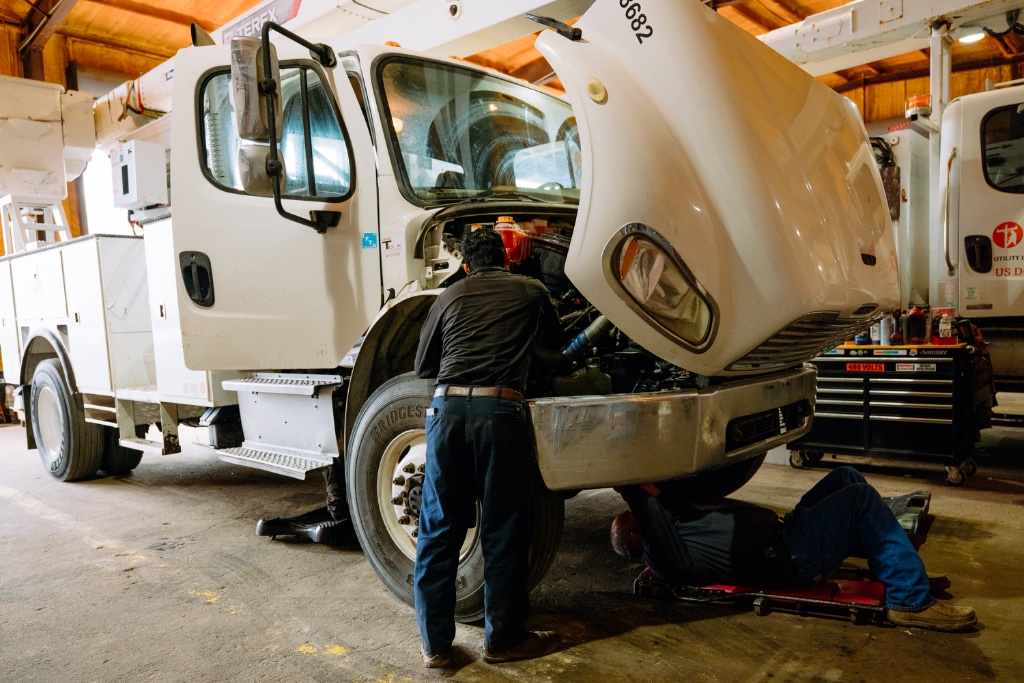
Equipment downtime is more expensive than most contractors realize. The visible cost — the repair bill — is only part of the total. The full cost of downtime includes lost revenue, idle crew labor, missed deadlines, rental replacement costs, customer impact, and safety risks. Understanding these costs is the first step in understanding why fleet preventive maintenance is a profit strategy rather than an expense.
Lost Revenue
Idle equipment means billable work isn't getting done — revenue stops the moment equipment goes down.
Idle Crews
Crews waiting for equipment repairs are still on the clock, burning labor costs without producing work.
Missed Deadlines
Equipment failures push project timelines, potentially triggering contract penalties and damaging client relationships.
Rental Replacement
Emergency equipment rentals to keep projects moving cost significantly more than scheduled maintenance.
Customer Impact
Delays damage contractor reputation and can cost future contracts — reliability is a competitive advantage.
Safety Risks
Equipment that fails during operation creates safety hazards for operators and ground crew.
The comparison between reactive and preventive maintenance approaches makes the cost case clear:
| Factor | Reactive Repair | Preventive Maintenance |
|---|---|---|
| Repair Cost | Emergency premium — higher parts & labor costs | Scheduled service — standard rates, no premium |
| Timing | Unpredictable — happens during project work | Planned — scheduled during project gaps |
| Project Impact | Stops active project work | Minimal — equipment remains available |
| Crew Productivity | Crews idle while equipment is down | Crews remain productive |
| Secondary Damage | High risk — failures damage other components | Low — components replaced before failure |
| Equipment Life | Shortened by failures and damage | Extended by regular service |
The pattern is consistent across every cost factor — preventive maintenance costs less, happens on schedule, and keeps equipment available. Reactive repair costs more, happens at the worst time, and stops project work. For contractors managing utility fleet maintenance, the choice between these approaches directly affects project profitability.
Definition
What Is Preventive Fleet Maintenance?
Fleet preventive maintenance is the systematic inspection, servicing, and repair of equipment before failure occurs. Rather than waiting for equipment to break (reactive maintenance), preventive maintenance follows a scheduled program of scheduled service, routine inspections, and component replacement designed to catch developing issues early. The goal is to keep equipment operational, reliable, and available — preventing the downtime that costs contractors money.
A comprehensive preventive maintenance program includes several elements. Scheduled service — regular fluid changes, filter replacements, and lubrication at defined intervals. Routine inspections — daily, monthly, quarterly, and annual inspections that catch developing issues. Predictive maintenance — using monitoring data (fluid analysis, performance metrics, wear measurements) to determine when service is needed based on equipment condition rather than just schedule. Equipment planning — using maintenance data to plan equipment replacement, service scheduling, and fleet composition.
Maintenance intervals are the foundation of the program — daily, weekly, monthly, quarterly, and annual service tasks that keep equipment in condition. These intervals are based on manufacturer recommendations, operating conditions, and equipment usage. The key principle is that maintenance is planned and scheduled, not reactive. This planning is what makes preventive maintenance more cost-effective than waiting for equipment to fail.
Equipment Lifecycle
How Preventive Maintenance Extends Equipment Life
Equipment that receives regular maintenance lasts longer and performs better throughout its service life. Equipment lifecycle management is the practice of maintaining equipment to maximize its useful life — and preventive maintenance is the core strategy.
Hydraulic Systems
Regular fluid service, filter replacement, and hose inspection prevent the contamination and degradation that cause hydraulic system failure — the leading cause of equipment downtime.
Engines
Scheduled oil changes, filter service, and cooling system maintenance keep engines performing reliably and prevent premature wear.
Electrical Systems
Connection inspection, battery service, and component testing prevent the electrical failures that can disable equipment operation.
Boom Assemblies
For aerial equipment, boom inspection, lubrication, and structural assessment extend the life of the most critical — and expensive — component.
Outriggers
Outrigger inspection and hydraulic service prevent the failures that can create safety hazards and stop equipment operation.
Fleet Lifecycle
Tracking equipment condition over time allows fleet managers to make informed decisions about repair, rebuild, and replacement timing.
Preventive Service
Don't Wait for Equipment to Break Down
Preventive maintenance helps identify problems before they stop your crews. CRANETEC provides fleet maintenance programs, equipment inspections, and on-site service for contractor fleets.
Failure Analysis
The Most Common Causes of Fleet Downtime
Understanding what causes equipment downtime is essential to preventing it. Most equipment failures fall into a few categories — and most can be prevented through the systematic maintenance that fleet preventive maintenance provides.
Hydraulic Failures
Contaminated fluid, degraded hoses, pump wear, and valve issues are the leading cause of equipment downtime for hydraulic equipment.
Electrical Issues
Corroded connections, failing switches, and electrical system faults can disable equipment operation.
Missed Inspections
Skipping scheduled inspections allows developing issues to go unnoticed until they cause equipment failure.
Poor Maintenance Records
Without documentation, service history is lost, maintenance planning is guesswork, and recurring issues go unidentified.
Operator Abuse
Improper operation — overloading, ignoring warning signs, and poor operating practices — accelerates equipment wear and failure.
Component Wear
Normal wear on rollers, bearings, hoses, and seals eventually causes failure if components aren't replaced at proper intervals.
Maintenance Framework
Building a Preventive Maintenance Schedule
A preventive maintenance program is built on a schedule — a structured set of service tasks performed at defined intervals. The following schedule framework covers the core service intervals that every fleet maintenance program should include.
Daily Maintenance
Weekly Maintenance
Monthly Maintenance
Quarterly Maintenance
Annual Maintenance
This schedule framework applies across equipment types — bucket trucks, digger derricks, cable placers, pullers, tensioners, and service trucks all benefit from this multi-tier service approach. The specific tasks within each interval may vary by equipment type, but the structure — daily through annual service — is universal for effective fleet preventive maintenance.
Performance Metrics
KPIs Every Fleet Manager Should Track
Contractor fleet management requires data. Tracking key performance indicators (KPIs) allows fleet managers to measure the effectiveness of maintenance programs, identify problem equipment, and make data-driven decisions about service scheduling and equipment replacement.
| KPI | Description | Target |
|---|---|---|
| Equipment Uptime | Percentage of time equipment is operational and available for work. | 95%+ |
| Mean Time Between Failures | Average operating time between equipment failures — higher is better. | Increasing trend |
| Maintenance Cost Per Unit | Total maintenance cost divided by number of equipment units. | Decreasing trend |
| Downtime Hours | Total hours equipment is unavailable due to maintenance or failure. | Decreasing trend |
| Inspection Compliance | Percentage of scheduled inspections completed on time. | 100% |
| Fleet Utilization | Percentage of time equipment is actively used for billable work. | 70-85% |
| Repair Frequency | How often each piece of equipment requires unscheduled repairs. | Decreasing trend |
| Average Repair Cost | Average cost per repair incident across the fleet. | Decreasing trend |
Tracking these KPIs over time reveals trends — which equipment is most reliable, which needs more service, which is approaching replacement. This data is the foundation of effective equipment lifecycle management and the proof that fleet preventive maintenance is delivering results.
Featured Case Study
Reducing Downtime Through Preventive Maintenance
CRANETEC's TM125 lower re-hose project demonstrates preventive maintenance in action. This project involved complete hydraulic hose replacement on a TM125 bucket truck lower assembly — the type of preventive service that prevents hydraulic failures in the field. The project restored system integrity, achieved inspection readiness, improved equipment reliability, and delivered reduced downtime by addressing hydraulic system issues before they caused equipment failure.
Equipment
TM125
Service
Lower Re-Hose
Location
Beaumont, TX
Outcome
Restored Reliability
Program Management
Preventive Maintenance Best Practices
Beyond the maintenance schedule itself, certain best practices help fleet managers build maintenance programs that deliver results over the long term.
Digital Maintenance Records
Use digital systems to track service history, schedule maintenance, and generate compliance documentation for each piece of equipment.
Operator Inspections
Train and require operators to perform pre-shift inspections and report issues immediately.
Routine Service Intervals
Establish and follow regular service intervals — don't let scheduled maintenance slip when projects get busy.
Vendor Partnerships
Develop relationships with qualified maintenance providers who understand your equipment and operating requirements.
Inventory Planning
Stock critical wear parts and filters to reduce repair wait times and keep equipment in service.
Hydraulic Monitoring
Monitor hydraulic system condition through regular fluid analysis, pressure testing, and performance tracking.
Competitive Advantage
Keep Your Fleet Working While Competitors Are Waiting for Repairs
CRANETEC builds custom fleet maintenance programs that keep contractor equipment reliable, available, and productive.
Equipment Coverage
Equipment That Benefits Most from Preventive Maintenance
All contractor equipment benefits from fleet preventive maintenance, but certain equipment types — those with hydraulic systems, lifting components, and critical safety systems — benefit most from systematic maintenance programs.
Bucket Trucks
Aerial lift equipment requiring hydraulic, electrical, boom, and ANSI inspection maintenance.
Digger Derricks
Pole setting and material handling equipment with hydraulic and structural maintenance needs.
Cable Placers
Cable placement equipment requiring hydraulic and cable handling component maintenance.
Pullers
Cable pulling equipment with hydraulic systems, winches, and rollers requiring regular service.
Tensioners
Cable tensioning equipment requiring hydraulic maintenance and tension control calibration.
Service Trucks
Support vehicles requiring engine, hydraulic, and equipment system maintenance.
Hydraulic Equipment
All hydraulic-powered equipment requiring fluid service, hose inspection, and system maintenance.
Industry Applications
Industries That Depend on Fleet Reliability
Equipment reliability is critical across industries that depend on utility equipment. Each of these sectors has specific equipment, compliance, and operational requirements that make fleet preventive maintenance essential.
Electric Utilities
Electric utility contractors depend on reliable bucket trucks, digger derricks, and aerial equipment for distribution and transmission work.
Telecommunications
Telecom contractors need reliable cable placers, bucket trucks, and cable installation equipment for network installation and maintenance.
Fiber Construction
Fiber construction contractors require pullers, tensioners, cable placers, and support equipment for network buildouts.
Government Contractors
Government contractors face strict compliance, inspection, and documentation requirements for fleet equipment.
Infrastructure Contractors
Infrastructure contractors depend on diverse equipment fleets for road, bridge, utility, and construction projects.
Municipal Fleets
Municipal fleets maintain diverse equipment for public works, utilities, and infrastructure maintenance.
Fleet Management Resources
Explore More Fleet Management Resources
Access equipment guides, maintenance checklists, inspection resources, and technical documentation for contractor fleet management.
Get Started
Request Fleet Maintenance Support
Submit your fleet details and our team will respond with a maintenance program proposal, service scheduling, and on-site availability for your equipment.
FAQ
Frequently Asked Questions
CRANETEC Services
Related Services
Complete fleet maintenance, inspection, repair, and equipment support services for contractor operations.
Get Started
Ready to Reduce Fleet Downtime?
CRANETEC helps contractors improve fleet reliability through preventive maintenance, inspections, repairs, and equipment support. One call connects you to the fleet services your operation requires.