CRANETEC — Fleet Maintenance Authority
The Ultimate Preventive Maintenance Checklist for Bucket Trucks
A comprehensive guide to daily, weekly, monthly, quarterly, and annual maintenance procedures that reduce downtime, improve safety, extend equipment life, and keep contractor fleets operating at peak performance.
For fleet managers, utility contractors, telecommunications contractors, and municipal fleet operators, a preventive maintenance checklist for bucket trucks is far more than a procedural document — it is the operational framework that determines whether equipment performs reliably, safely, and profitably across its service life. Bucket trucks operate under hydraulic pressure, structural load, electrical exposure, and environmental stress conditions that produce continuous wear on every system. Without a structured maintenance program, that wear accumulates undetected until it produces a failure — and failures on active project sites carry costs that extend far beyond the repair invoice.
Downtime costs are the most immediate consequence of inadequate maintenance. When a bucket truck fails during active operations, the cost is not just the repair — it is the idle crew, the delayed project schedule, the potential contract penalty, and the cascading impact on downstream work phases. A single equipment failure on a utility restoration project, a fiber installation deadline, or a municipal infrastructure contract can erase weeks of productivity margin. Contractor productivity depends on equipment availability, and equipment availability depends on maintenance discipline.
Safety implications are even more significant. Bucket trucks lift workers to elevated positions where equipment failure can produce catastrophic consequences. Hydraulic system degradation, structural fatigue, insulation breakdown, and control system malfunctions are not abstract maintenance concerns — they are direct threats to worker safety. A bucket truck preventive maintenance program is the systematic process that verifies equipment can perform its designed function safely, every day it is placed in service.
Equipment lifespan and compliance considerations round out the case for preventive maintenance. Well-maintained bucket trucks deliver years of additional service life compared to neglected units, producing substantially better return on fleet investment. ANSI A92.2 inspection requirements, OSHA regulations, insurance program conditions, and contract qualification standards all require documented maintenance as a condition of operation. This guide provides a complete preventive maintenance checklist for bucket trucks that addresses all of these concerns — from daily operator checks through annual compliance inspections — structured to help fleet managers and contractors build maintenance programs that reduce operating costs and increase fleet reliability.
Keep Your Fleet Running at Peak Performance
CRANETEC provides comprehensive fleet maintenance, mobile service, and technical resources for utility contractors and fleet managers. Explore our maintenance and service programs:
Fleet Preventive Maintenance Programs
Structured maintenance programs for contractor fleets.
Mobile Oil Change Services
On-site oil change and fluid service for fleet equipment.
Bucket Truck Repair
Mobile hydraulic, electrical, and structural repair services.
Resource Center
Technical guides, maintenance resources, and compliance documentation.
Why Maintenance Matters
Why Preventive Maintenance Matters for Bucket Trucks
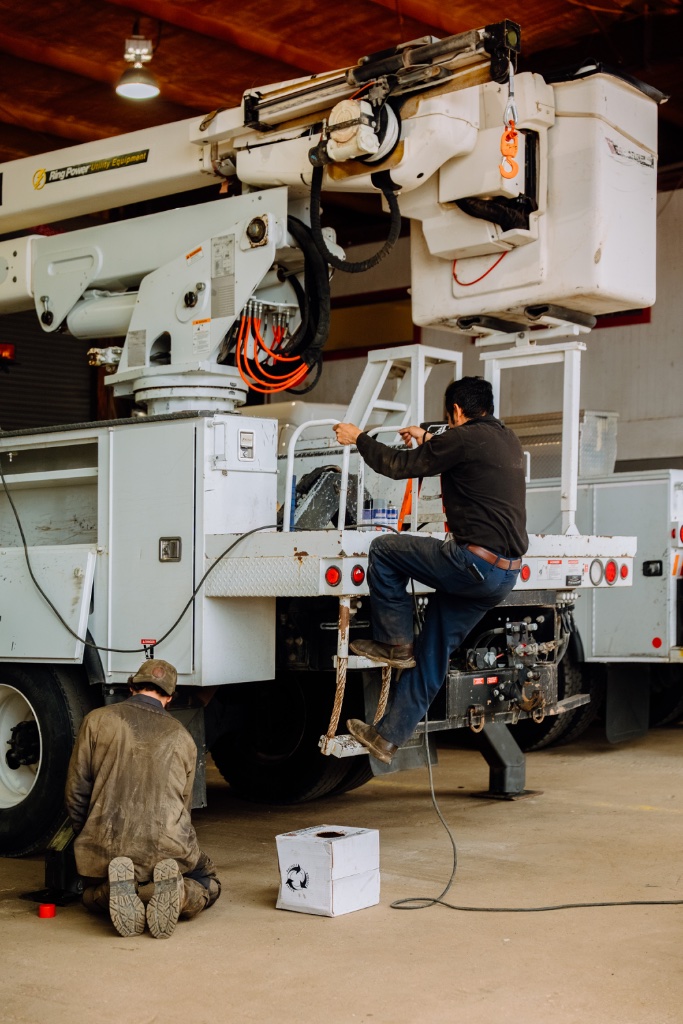
Safety is the primary reason a preventive maintenance checklist for bucket trucks matters. Aerial devices lift workers to heights where equipment failure can produce life-altering injuries or fatalities. Every system on a bucket truck — hydraulic, structural, electrical, mechanical, and safety devices — must function correctly to protect the operator. A systematic maintenance program verifies that these systems are performing as designed, catching degradation before it becomes dangerous. For utility contractors working near energized lines, telecommunications contractors operating at height, and municipal crews performing routine infrastructure work, the maintenance program is the safety foundation that every other operational decision rests upon.
Reliability and fleet uptime are the operational benefits that contractors feel directly. Equipment that is inspected, serviced, and maintained on schedule is available for deployment when projects need it. Equipment that is maintained reactively — only when something breaks — is unavailable at unpredictable times, often when the equipment is most needed. For contractors managing tight project schedules, utility restoration timelines, or multi-phase infrastructure programs, fleet uptime is the metric that connects maintenance discipline to business performance. A well-executed utility fleet maintenance program transforms equipment availability from a variable into a managed asset.
Cost control is where preventive maintenance delivers its clearest financial return. Planned maintenance costs less than emergency repair. Early intervention costs less than failure recovery. Component replacement on schedule costs less than cascading damage from a failed component. Real-world contractor experience consistently shows that a structured preventive maintenance program pays for itself many times over in avoided repair costs, avoided project downtime, and extended equipment service life. The fleet maintenance checklist is the tool that makes this cost control systematic rather than incidental.
Contractor scheduling benefits from the predictability that maintenance-based fleet management provides. When fleet managers know which units need service and when, they can schedule maintenance around project commitments rather than experiencing maintenance as an interruption to active work. Equipment lifespan extends dramatically — a bucket truck maintained on a structured service schedule will deliver years of additional productive service compared to a unit maintained only when failures occur. For contractors whose capital investment in aerial equipment is significant, the lifespan extension that preventive maintenance delivers is a direct contribution to bottom-line profitability.
Daily Checklist
Daily Bucket Truck Maintenance Checklist
Daily inspections are the first line of defense in any preventive maintenance checklist for bucket trucks. Performed by the operator before each use, these checks catch obvious issues before the equipment is committed to active work. Daily bucket truck maintenance establishes a documented record that the equipment was assessed for safe operation each day it was placed in service — a critical element for OSHA compliance and liability management.
| Checklist Item | What to Inspect | Status |
|---|---|---|
Visual Inspection | Walk-around inspection of entire unit for damage, leaks, or abnormalities | Daily |
Hydraulic Leaks | Check booms, cylinders, valves, and fittings for fluid leaks | Daily |
Tire Condition | Verify tire pressure, tread depth, and overall condition | Daily |
Outrigger Inspection | Inspect pads, deployment, and stability system | Daily |
Fluid Levels | Check hydraulic, engine oil, coolant, and transmission fluids | Daily |
Warning Lights | Verify all dashboard indicators and warning systems functional | Daily |
Safety Equipment | Confirm PPE, fall protection, and emergency equipment present | Daily |
The daily inspection begins with a visual inspection — a complete walk-around of the unit looking for damage, leaks, loose components, or anything abnormal. Hydraulic leaks are a primary focus: check booms, cylinders, valves, hoses, and fittings for any sign of fluid. Even minor leaks signal system pressure loss and progressive wear that will worsen with continued operation. Tire condition verification includes pressure, tread depth, and overall condition — tire failure on a bucket truck can destabilize the entire unit.
Outrigger inspection confirms that the stability system is ready for deployment — check pads for wear, verify smooth deployment, and ensure the system can establish the support the boom requires. Fluid levels must be verified daily: hydraulic fluid, engine oil, coolant, and transmission fluid. Low fluid levels are an early indicator of leaks or consumption issues that need attention. Warning lights and dashboard indicators should be checked at startup — any active warning requires assessment before the equipment is placed in service. Finally, safety equipment verification confirms that PPE, fall protection, and emergency equipment are present and functional.
Weekly Checklist
Weekly Maintenance Checklist
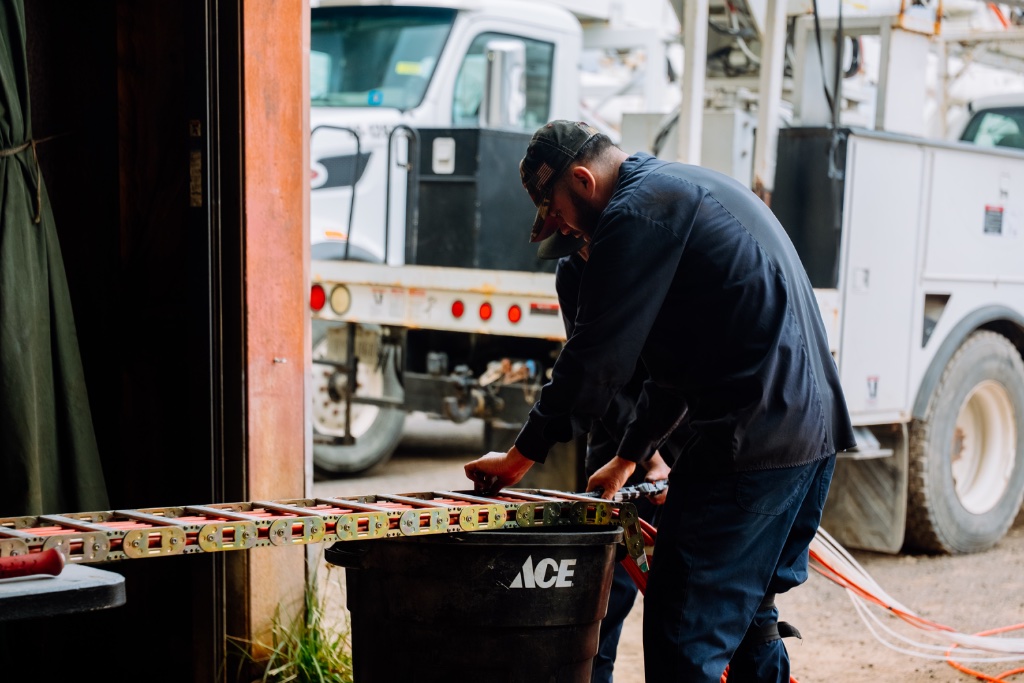
Weekly maintenance extends the daily checklist with more detailed attention to systems that may show change over the course of a work week. The weekly preventive maintenance checklist for bucket trucks focuses on components that develop issues gradually — hose wear, electrical system changes, lubrication needs, fastener loosening, and operational performance shifts.
Hose Inspections
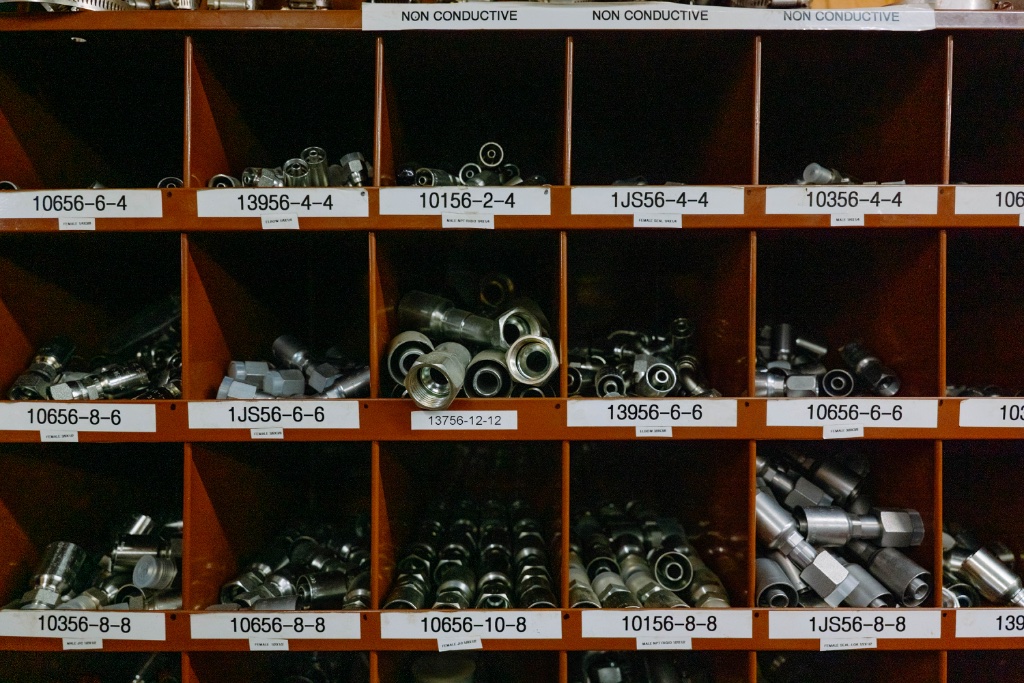
Hose inspections are a critical weekly task. Hydraulic hoses carry system pressure throughout the boom, cylinder, and control circuits. Over time, hoses develop cracks, abrasion, fitting leaks, and reinforcement degradation. A hose that fails under pressure produces immediate system loss and potential safety hazard. Weekly inspection identifies hoses approaching failure before they produce an incident. For comprehensive hydraulic system issues identified during weekly checks, CRANETEC provides specialized hydraulic repair services that address hose, cylinder, and system problems.
Electrical Checks
Electrical checks verify that control systems, warning indicators, lighting, and safety interlocks are functioning correctly. Electrical issues in aerial devices can affect boom function, outrigger deployment, and safety system operation — problems that directly impact operator safety. Weekly electrical assessment catches intermittent issues that daily checks may miss. For identified electrical system problems, CRANETEC provides bucket truck electrical repair services that diagnose and resolve control, wiring, and system issues.
Lubrication Points
Lubrication points require weekly attention. Boom pivot points, outrigger mechanisms, rotation bearings, and extension components all depend on proper lubrication to prevent accelerated wear. Inadequate lubrication is one of the most common causes of premature component failure in aerial devices. The bucket truck service schedule should specify all lubrication points, the correct lubricant, and the application interval.
Fastener Inspections & Operational Testing
Fastener inspections verify that structural bolts, mounting hardware, and critical connections remain properly torqued. Vibration, thermal cycling, and operational stress can loosen fasteners over time — a loose fastener on a structural component is a safety issue. Operational testing completes the weekly checklist by verifying that boom functions, outrigger deployment, control response, and safety devices all perform as designed. Any deviation from expected performance during operational testing indicates a developing issue that requires further assessment.
Maintenance Scheduling
Avoid Costly Equipment Downtime
Preventive maintenance identifies small issues before they become major repairs. A structured maintenance program keeps your fleet available, compliant, and productive — protecting both your equipment investment and your project schedules.
Monthly Checklist
Monthly Maintenance Checklist
Monthly maintenance brings a deeper level of assessment to the preventive maintenance checklist for bucket trucks. While daily and weekly checks focus on visible condition and operational performance, monthly inspections assess system integrity, component wear patterns, and performance trends that develop over longer timeframes.
Hydraulic System Inspections
Hydraulic system inspections at the monthly level go beyond leak detection to assess system pressure, cylinder performance, valve function, and fluid condition. Hydraulic fluid should be checked for contamination, degradation, and correct level. Cylinders should be evaluated for smooth operation, proper holding, and seal integrity. Monthly hydraulic assessment is where developing issues are often first identified — a cylinder that drifts slightly, a valve that responds marginally slower, or fluid that shows early contamination are all indicators that warrant attention before they become failures. For comprehensive bucket truck maintenance programs, CRANETEC structures monthly service around these detailed system assessments.
Boom Inspections
Boom inspections at the monthly level assess structural condition, wear pad condition, extension mechanism performance, and boom alignment. Boom wear pads are a critical focus — worn pads produce metal-on-metal contact that accelerates structural damage and affects boom performance. Boom alignment issues can develop from normal operational stress and, if uncorrected, produce uneven wear that shortens component life. Boom performance problems that affect lifting capability require immediate attention — learn more about boom not lifting issues and their diagnostic process.
Structural Evaluations & Control Testing
Structural evaluations look for cracks, deformation, corrosion, and fastener integrity across boom structure, platform mounting, vehicle mounting, and outrigger assemblies. Any structural concern takes the equipment out of service immediately. Control testing verifies that all boom controls, outrigger controls, emergency controls, and safety interlocks function correctly. Control response should be smooth, proportional, and consistent — any deviation indicates a problem in the hydraulic or electrical control system. Safety systems including overload protection, emergency stop functions, and interlock systems must be tested to verify they will perform their protective function when needed.
Quarterly Best Practices
Quarterly Maintenance Best Practices
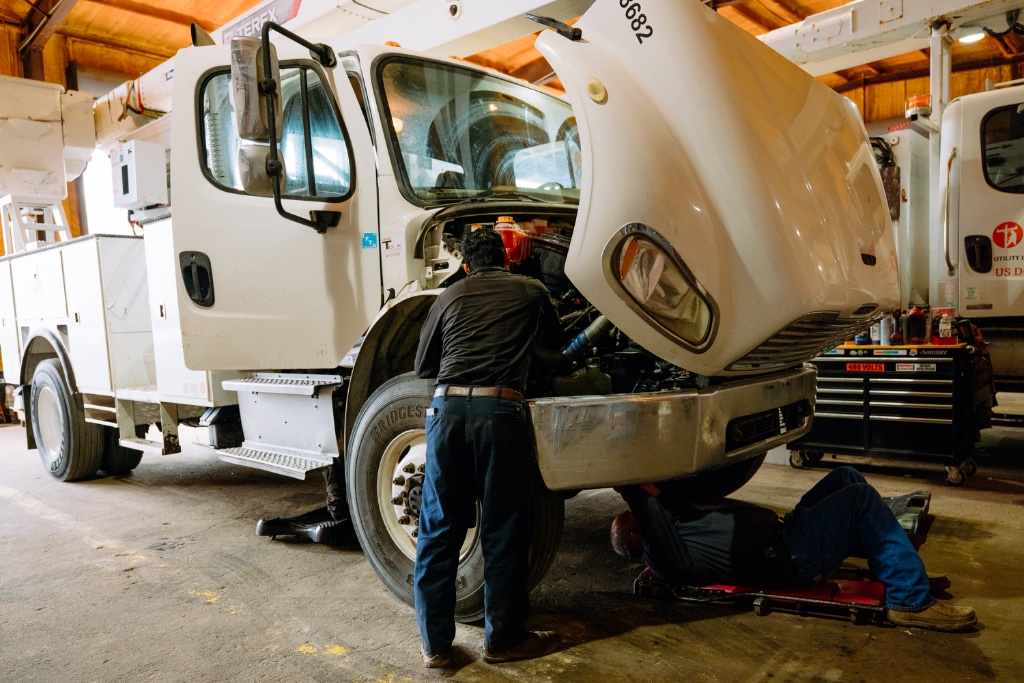
Quarterly maintenance is where the preventive maintenance checklist for bucket trucks transitions from condition monitoring to comprehensive assessment. Performed every three months by qualified personnel, quarterly inspections provide the detailed evaluation that catches developing issues before they reach the failure threshold. This is the interval where component wear patterns become identifiable and maintenance planning becomes truly preventive rather than reactive.
Detailed inspections at the quarterly level cover every system on the equipment with a depth that daily, weekly, and monthly checks cannot achieve. This includes internal component assessment where accessible, comprehensive hydraulic system evaluation, complete electrical system testing, structural inspection beyond visual surface checks, and full operational performance verification. Quarterly inspections should produce detailed documentation of findings — this documentation is what enables trend tracking and maintenance planning.
Performance testing during quarterly maintenance verifies that the equipment meets operational specifications. Boom lift capacity, reach capability, extension speed, rotation performance, and outrigger deployment time should all be measured against specifications. Deviations from specification indicate wear or developing problems that need attention. Component wear tracking uses quarterly inspection findings to monitor how components are degrading over time. This tracking enables predictive maintenance — replacing components before they fail based on observed wear trends rather than waiting for failure to occur.
Maintenance records are the backbone of quarterly maintenance and the broader preventive maintenance program. Documentation should include inspection findings, measurements taken, components assessed, wear observations, corrective actions performed, parts replaced, and recommendations for future service intervals. Complete bucket truck inspections documentation enables fleet managers to make informed decisions about repair timing, component replacement, equipment lifecycle, and fleet replacement planning. Without comprehensive documentation, maintenance decisions become guesswork rather than data-driven planning. This is why documentation discipline is a core best practice of any serious preventive maintenance program.
Annual Compliance
Annual Maintenance & Compliance Requirements
Annual maintenance is the comprehensive assessment that every aerial device must undergo each year. The preventive maintenance checklist for bucket trucks culminates in the annual ANSI A92.2 inspection — the compliance requirement that governs whether the equipment can legally and safely be placed in service. For fleet managers and contractors, annual compliance is not optional — it is the regulatory framework that determines equipment operability, contract qualification, and liability exposure.
ANSI Inspections
ANSI inspections under the A92.2 standard require a comprehensive annual inspection performed by a qualified inspector. This inspection covers every system on the equipment — structural, hydraulic, electrical, mechanical, and safety devices. The inspection produces compliance documentation that includes the inspection date, inspector qualifications, equipment identification, items inspected, deficiencies found, corrective actions taken, and the next inspection due date. Annual ANSI bucket truck inspections are the compliance cornerstone that demonstrates the equipment meets industry standards for continued service.
Dielectric Testing
Dielectric testing is required for all insulated aerial devices — bucket trucks with fiberglass booms, insulated platforms, or other insulation systems used near energized electrical lines. Dielectric testing verifies that the insulation properties of the boom and platform system are intact and capable of providing the electrical protection the equipment is designed to deliver. This testing is required at minimum every 12 months and is a distinct requirement from the ANSI annual inspection, though both are typically performed together. Comprehensive dielectric testing services ensure electrical safety compliance for utility and telecommunications equipment.
Fleet Readiness & Compliance
Fleet readiness depends on annual compliance being current across the entire fleet. Equipment with overdue inspections is out of compliance and should not be operated. Compliance requirements extend beyond ANSI and dielectric testing to include OSHA regulations, insurance program conditions, utility company contractor qualification standards, and government project compliance requirements. For contractors on multi-year infrastructure programs, maintaining current annual compliance documentation across the fleet is a prerequisite for continued project participation. A well-structured preventive maintenance checklist for bucket trucks ensures that annual compliance is planned, scheduled, and completed on time — not discovered overdue when a project qualification review occurs.
Featured Fleet Maintenance Project
Featured Fleet Maintenance Project
TM125 Lower Re-Hose Project — Beaumont, TX
CRANETEC performed a complete hydraulic lower re-hose restoration on a TM125 bucket truck — demonstrating the preventive maintenance value, hydraulic system restoration, and equipment reliability improvements that a structured maintenance program delivers. This project illustrates how addressing identified hydraulic system issues before failure preserves equipment uptime and reduces total lifecycle repair costs. The TM125 lower re-hose project represents exactly the kind of intervention that a well-structured preventive maintenance checklist for bucket trucks identifies and schedules before equipment failure forces reactive, project-disrupting repair. By restoring the hydraulic system proactively, the equipment returned to full operational readiness with reduced downtime risk going forward.
Common Issues
Most Common Maintenance Issues Found During Inspections
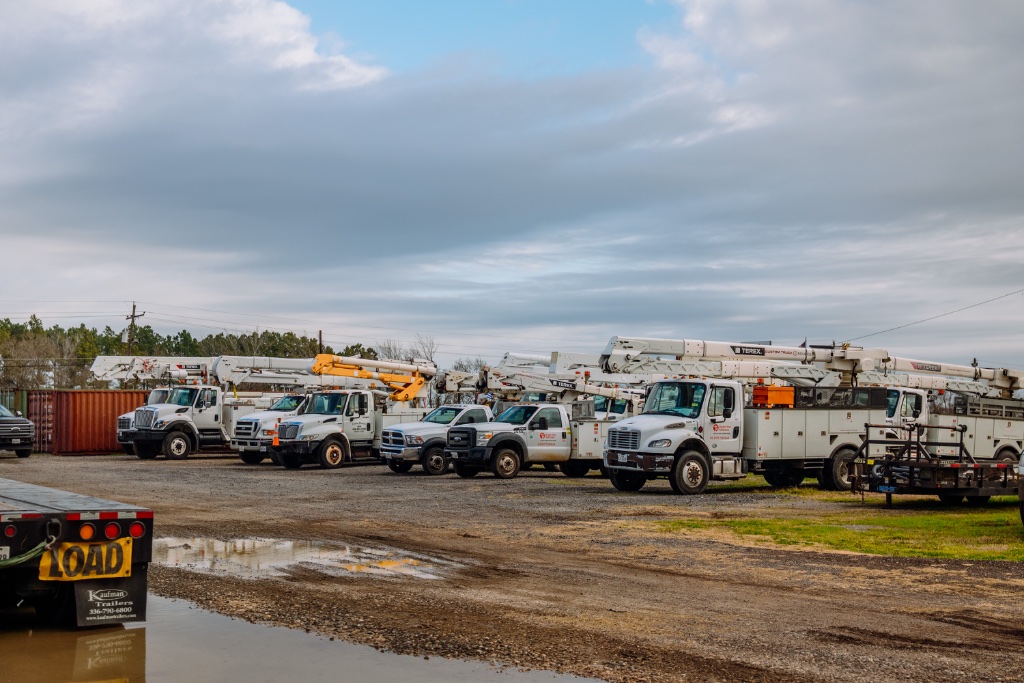
Understanding the most common maintenance issues found during bucket truck inspections helps fleet managers and operators recognize symptoms early and prioritize maintenance attention. These are the issues that a preventive maintenance checklist for bucket trucks is designed to detect — and addressing them early is what makes maintenance preventive rather than reactive.
Hydraulic Leaks
The most common issue found during inspections. Leaks develop at seals, fittings, hoses, and cylinder rods over time. Even minor leaks indicate system pressure loss and progressive wear. Early detection through the maintenance checklist prevents the cascading damage that unaddressed leaks produce.
Hose Wear
Hydraulic hoses degrade through abrasion, environmental exposure, pressure cycling, and age. Cracks, blisters, fitting leaks, and reinforcement exposure are all indicators that a hose is approaching failure. Hose replacement on schedule prevents the sudden failure that produces immediate system loss.
Boom Issues
Boom wear pad degradation, alignment changes, extension mechanism wear, and structural concerns develop gradually. Boom issues affect lifting capability, positioning precision, and operator safety — all critical functions that the maintenance program must protect.
Outrigger Concerns
Outrigger deployment issues, pad wear, hydraulic cylinder drift, and stability system malfunctions affect the foundation of safe aerial operations. Outrigger problems are stability problems — equipment cannot be safely operated if the outrigger system cannot reliably establish support.
Electrical Problems
Control system malfunctions, warning indicator failures, safety interlock issues, and wiring degradation affect the systems that protect the operator. Electrical problems in aerial devices require qualified assessment because they can affect the safety systems that prevent dangerous operation.
Cost Reduction
How Preventive Maintenance Reduces Repair Costs
The financial case for a preventive maintenance checklist for bucket trucks is compelling and consistent across contractor experience. Preventive maintenance reduces repair costs through multiple mechanisms — each of which produces measurable savings that compound over the equipment lifecycle.
Emergency repairs are the most expensive form of maintenance. A hydraulic failure, structural issue, or electrical problem that occurs during active operations requires immediate response, often outside normal service hours, at premium rates, and with the additional cost of project disruption. The same issue, identified through scheduled maintenance and addressed during a planned service window, costs substantially less. A bucket truck preventive maintenance program systematically converts expensive emergency repairs into planned, cost-controlled maintenance interventions.
Unplanned downtime carries costs that extend far beyond the repair itself. When a bucket truck fails on a project site, the idle crew, delayed schedule, potential contract penalties, and cascading impact on downstream work phases all produce costs that can dwarf the repair invoice. For utility contractors on restoration timelines, telecommunications contractors on installation deadlines, or infrastructure contractors on multi-phase programs, a single equipment failure can erase weeks of productivity margin. The fleet maintenance checklist prevents these failures by identifying issues before they produce downtime.
Fleet replacement costs are reduced because well-maintained equipment lasts longer. A bucket truck that receives consistent preventive maintenance delivers years of additional service life compared to a neglected unit. This extended service life defers the capital expenditure of replacement, producing direct savings that improve fleet profitability. For contractors with significant investment in aerial equipment, the lifespan extension that a structured maintenance program delivers is a substantial financial benefit.
Project delays caused by equipment failure are perhaps the most visible cost of inadequate maintenance. When a contractor cannot deploy equipment because it has failed, the project schedule slips, client confidence erodes, and the contractor's reputation for reliability suffers. In competitive contracting environments where reliability is a differentiator, the ability to deploy equipment on schedule — supported by a proven preventive maintenance checklist for bucket trucks — is a business advantage that translates directly into contract awards and client retention.
Fleet Protection
Build a Maintenance Program That Reduces Downtime
A structured preventive maintenance program is the most effective way to reduce repair costs, extend equipment life, and keep crews productive. CRANETEC helps contractors build maintenance programs tailored to their fleet operations.
The CRANETEC Difference
Why Contractors Trust CRANETEC for Fleet Maintenance
Utility contractors, telecommunications contractors, municipal fleet operators, and infrastructure project teams trust CRANETEC for fleet maintenance because the company brings specialized expertise that general service providers cannot match. CRANETEC has built its reputation on understanding aerial devices, hydraulic systems, electrical controls, and the operational realities of contractor fleet management — not as a general truck repair shop that occasionally works on bucket trucks.
Mobile Service
On-site maintenance at contractor facilities, fleet yards, and project locations — eliminating transport downtime.
Preventive Maintenance Programs
Structured maintenance programs built around contractor project schedules and fleet deployment cycles.
Utility Equipment Expertise
30+ years of specialized experience with aerial devices, hydraulic systems, and utility equipment.
Contractor Support
Service delivery structured around the operational realities of active contractor fleets and project demands.
Multi-State Coverage
Consistent service standards across TX, LA, FL, NC, GA, AL, TN and beyond.
Compliance Documentation
Full documentation supporting OSHA, insurance, and project qualification requirements.
Technical Resources
Explore More Fleet Maintenance Resources
Access technical guides, maintenance resources, and compliance documentation for utility equipment fleet operations.
Get Started
Request Fleet Maintenance Support
Submit your fleet details and our team will respond with maintenance availability, on-site scheduling options, and a program proposal tailored to your fleet operations.
FAQ
Frequently Asked Questions
CRANETEC Services
Related Services
Complete utility equipment support — from preventive maintenance and inspections to repair and compliance.
Get Started
Need Preventive Maintenance Support?
CRANETEC helps contractors reduce downtime, improve fleet reliability, and extend equipment life through professional maintenance programs. One call connects you to the complete spectrum of maintenance, inspection, and compliance services your fleet requires.