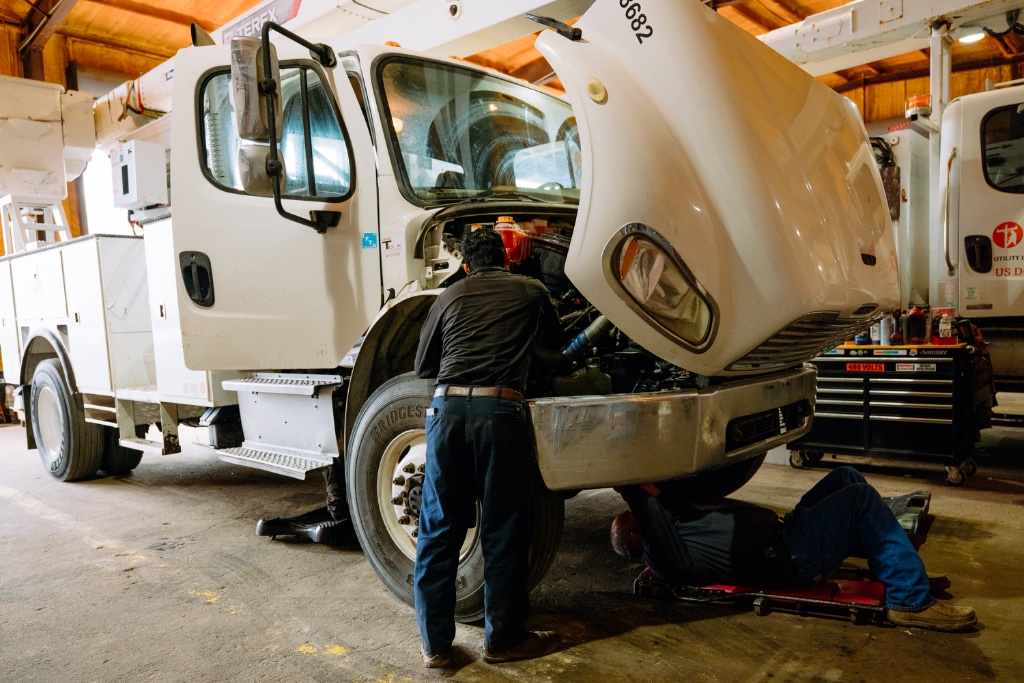
Hydraulic System Solutions for Utility & Infrastructure Equipment
Expert hydraulic repair, diagnostics, preventive maintenance, hose replacement, cylinder repair, inspections, and fleet support for contractors across the utility, telecommunications, and infrastructure industries.
0
Serving Since
0+
States Serviced
0+
Hydraulic Repairs
0/7
Emergency Response
On This Page
What You'll Learn
Everything you need to know about hydraulic systems — repair, diagnostics, maintenance, and fleet support.
The Fundamentals
What Is a Hydraulic System?
A hydraulic system uses pressurized fluid to transmit power and motion. In utility equipment, hydraulic systems power booms, buckets, outriggers, augers, winches, and lift cylinders on bucket trucks, digger derricks, cable placers, pullers, and tensioners. The reliability of a contractor fleet depends directly on the health of its hydraulic systems.
The basic hydraulic principle is force multiplication. A small input force applied to a pump creates high pressure in confined fluid, and that pressure acts on a larger cylinder area to generate a much greater output force. Pressure determines the force the system can produce, while flow determines how fast the output moves. Both must be correct for proper equipment operation.
A complete hydraulic circuit includes a reservoir (fluid tank), a pump (pressurizes fluid), valves (direct flow and pressure), hoses (transport fluid), cylinders (linear motion) or motors (rotary motion), and filters (clean fluid). Hydraulic fluid type is specified by the equipment manufacturer and must be kept clean and properly filled.
Safety considerations are critical: hydraulic systems operate at high pressure that can cause serious injury. Always relieve pressure before service, wear proper PPE, never inspect for pinhole leaks with bare hands (pressurized fluid can inject through skin), and support any raised loads before working beneath them.
How a Hydraulic System Works
Component Guide
Common Hydraulic Components
The components that make up every hydraulic system on utility equipment.
| Component | Function | Common Failure |
|---|---|---|
| Pump | Pressurizes fluid | Wear, cavitation, pressure loss |
| Cylinder | Linear motion | Seal failure, drift, leakage |
| Hose | Transports fluid | Abrasion, leaks, age |
| Valve | Directs flow & pressure | Leakage, sticking, solenoid failure |
| Filter | Removes contamination | Clogging, bypass |
Warning Signs
Signs Your Hydraulic System Needs Service
Early detection of hydraulic symptoms prevents downtime and catastrophic failure.
| Symptom | Possible Cause | Recommended Action |
|---|---|---|
| Fluid leaks | Hose, fitting, or seal failure | Inspect and replace leaking components |
| Pressure loss | Pump wear, valve leakage, or low fluid | Diagnose pump, valves, and fluid level |
| Slow boom movement | Low flow or internal bypass | Test pump output and cylinder seals |
| Overheating | Low fluid, contamination, or restricted flow | Check fluid, filters, and cooler |
| Abnormal noises | Cavitation, aeration, or pump wear | Inspect inlet, fluid level, and pump |
| Contaminated fluid | Ingested dirt, moisture, or wear particles | Replace filters and service fluid |
| Seal failures | Wear, heat, or contamination | Rebuild cylinder and address cause |
| Erratic operation | Air in system, valve issue, or control fault | Bleed system and test controls |
CRANETEC Capabilities
Hydraulic Services Offered by CRANETEC
Complete hydraulic service — from diagnostics to fleet programs.
Don't Wait
Hydraulic Problems Rarely Fix Themselves
Identify issues early to reduce downtime, improve safety, and extend equipment life.
Prevention
Preventive Hydraulic Maintenance
A documented preventive maintenance program is the most effective way to prevent hydraulic failures.
Preventive hydraulic maintenance includes daily inspections, fluid analysis, filter replacement, hose and seal inspections, pressure testing, and annual comprehensive service. Each interval catches issues before they cause downtime. CRANETEC builds custom hydraulic maintenance programs for contractor fleets.
Operator fluid level & leak inspection
Hose, fitting & cylinder visual inspection
Filter check & fluid condition analysis
Pressure test & seal inspection
Comprehensive hydraulic service & documentation
Diagnose
Hydraulic Troubleshooting Guide
Interactive troubleshooting for common hydraulic system problems.
Equipment Coverage
Equipment We Support
Hydraulic service for the utility equipment contractors rely on.
Fleet Integration
Fleet Hydraulic Management
Coordinated hydraulic maintenance across your entire equipment fleet.
Fleet hydraulic management coordinates scheduled inspections, preventive maintenance, lifecycle planning, and downtime reduction across a fleet of hydraulic equipment. CRANETEC integrates hydraulic service into comprehensive fleet management programs that maximize uptime and equipment life.
Scheduled Inspections
Coordinated hydraulic inspections.
Preventive Maintenance
Programs that prevent failure.
Lifecycle Planning
Repair vs replace decisions.
Fleet Reliability
Maximize uptime and availability.
Proven Results
Featured Case Studies
Real hydraulic service outcomes for contractor equipment.
Knowledge Library
Resource Center
Guides, checklists, and documentation for hydraulic systems.
Questions & Answers
Frequently Asked Questions
Keep Reading
Related Content
Explore the hydraulic and equipment content clusters.
Speak With Us
Talk With a Hydraulic Systems Specialist
Submit your equipment and issue details and our hydraulic specialists will respond with diagnosis, repair, or fleet support.
Get Started
Protect the Hydraulic Systems That Keep Your Fleet Working
CRANETEC delivers hydraulic repair, diagnostics, maintenance, and fleet support that keep contractor equipment reliable and available.