For contractor fleets operating across Charlotte, Raleigh, Greensboro, Durham, and the broader North Carolina market, the state's climate presents maintenance challenges that are consistently underestimated when applying national-average service guidelines to local operating conditions. North Carolina's combination of sustained summer heat — temperatures regularly exceeding 90°F across the Piedmont and coastal plain from June through September — and year-round relative humidity above 60% creates a fleet equipment environment in which the failure mechanisms that produce costly breakdowns operate at rates meaningfully higher than those assumed by most manufacturer service specifications.
Fleet failures North Carolina heat humidity drive a predictable set of equipment failure categories: cooling system failures accelerated by sustained high ambient temperatures, hydraulic system degradation driven by elevated fluid temperatures and humidity-sourced water contamination, electrical system failures caused by moisture infiltration into control enclosures, and accelerated component wear across every lubricated interface in the fleet. Understanding each failure mechanism — and the preventive maintenance interventions that interrupt it — is the foundation of an effective fleet maintenance North Carolina heat strategy for contractor fleets operating in the state's demanding climate.
CRANETEC provides preventive fleet maintenance North Carolina programs for contractor fleets across the state, delivering mobile service at contractor facilities, staging yards, and active job sites. This article covers the specific ways North Carolina's heat and humidity drive equipment failures in contractor fleet vehicles and the preventive maintenance approaches that keep fleets reliable through the state's most demanding operating conditions.
How Heat Impacts Contractor Fleet Vehicles
Sustained summer heat affects contractor fleet vehicles through four primary mechanisms: engine thermal loading, cooling system stress, fluid degradation, and accelerated component wear. Each mechanism operates independently, but their effects compound — a fleet vehicle operating with marginally degraded cooling system performance under sustained heat accumulates engine wear at a rate that neither the cooling system condition alone nor the engine wear rate alone would predict.
Engine Thermal Loading and Overheating
Contractor fleet engines in North Carolina's summer heat operate closer to their thermal limits than in moderate-climate environments. PTO operation — powering hydraulic systems for aerial device function — adds meaningful heat load to engine cooling system demands beyond what highway transit alone requires. A bucket truck running its aerial device for extended periods during peak summer heat is managing simultaneous cooling demands from the drive engine, the hydraulic system heat exchanger, and ambient air temperatures that provide reduced cooling differential compared to cooler months.
Engine oil viscosity breakdown under sustained high-temperature operation is a compounding factor. Oil formulated for a specific viscosity range at operating temperature loses its viscosity stability faster when ambient temperatures push the oil toward the upper end of its designed operating range. Oil near the end of its service interval in sustained summer heat may be operating significantly outside its designed viscosity range — reducing its film strength and bearing protection effectiveness at precisely the conditions where maximum protection is most critical. This is one of the primary reasons fleet maintenance North Carolina heat programs require compressed oil change intervals relative to manufacturer specifications developed for moderate climates.
Cooling System Stress
The cooling system is the component category under the most direct and continuous stress from North Carolina's summer temperatures. Coolant additive packages — the corrosion inhibitors, scale inhibitors, and cavitation protection additives that protect the cooling system's internal components — deplete at rates that are temperature-dependent. A cooling system with 12-month-old coolant in North Carolina's summer may have an additive package depletion level that would not be reached until 18 months of operation in a cooler climate. This depletion creates internal corrosion conditions that are invisible without a coolant condition test but measurably accelerate radiator, water pump, and cylinder head deterioration.
Accelerated Fluid Degradation
Every fluid in a contractor fleet vehicle degrades faster under sustained thermal loading. Transmission fluid operating near its upper temperature limit develops oxidation products that reduce its friction modifier effectiveness and accelerate clutch pack wear. Differential and transfer case lubricants running in sustained summer heat under towing and load conditions develop viscosity breakdown that reduces gear surface protection. Power steering fluid approaching service interval in sustained heat loses its viscosity stability and anti-wear properties. Equipment failure North Carolina heat conditions routinely involve fluid degradation as a contributing factor, even when individual fluid services appear to be current — because nationally-calibrated intervals do not account for North Carolina's thermal acceleration of fluid degradation.
How Humidity Affects Fleet Equipment
North Carolina's humidity operates year-round as a fleet equipment failure driver — not limited to the summer season. Relative humidity above 60% is the annual baseline across most of North Carolina, with Piedmont and coastal regions experiencing higher sustained levels and periodic high-humidity weather events that create acute moisture exposure conditions for fleet equipment stored outdoors or in open facilities.
Corrosion and Structural Degradation
Steel chassis components, outrigger systems, boom structures, and mounting interfaces exposed to sustained humidity develop surface corrosion that compromises both structural integrity and dimensional accuracy at fit surfaces. In aerial device applications, corrosion at pin and bushing interfaces creates dimensional looseness that becomes a structural qualification issue during ANSI A92.2 inspections. Corrosion at electrical grounding connection points — often overlooked in routine maintenance — creates high-resistance ground paths that produce difficult-to-diagnose electrical symptoms throughout vehicle systems.
Moisture Intrusion and Electrical Failures
The most operationally disruptive consequence of North Carolina's humidity for contractor fleet equipment is moisture infiltration into electrical control systems. Control enclosures on aerial devices, service bodies, and specialized equipment are sealed against moisture ingress by rubber gaskets and foam seals that degrade over time under UV exposure, temperature cycling, and mechanical compression set. As enclosure seals degrade, daily temperature cycling — warming during the day, cooling at night — creates a pumping action that draws ambient humid air into the enclosure on cooling and traps it there. Over weeks and months, condensation accumulates on circuit boards, relay contacts, and connector interfaces, creating the oxidation deposits that drive intermittent and eventually permanent electrical failures.
Hydraulic Water Contamination
Hydraulic reservoir breathers designed to allow pressure equalization during fluid temperature cycling also allow atmospheric moisture to enter the reservoir in humid environments. In North Carolina's sustained humidity conditions, this mechanism delivers meaningful water contamination to hydraulic systems over time — particularly in equipment that sees daily thermal cycling from overnight low temperatures to daytime high temperatures. Water in hydraulic fluid at concentrations as low as 0.05% initiates hydrogen embrittlement of high-strength steel components and reduces bearing fatigue life measurably. At 0.1% water content — still far below the level visible to the naked eye — bearing service life reduction reaches 50% or more.
Most Common Fleet Failures in North Carolina
Fleet failures North Carolina heat humidity conditions produce a consistent pattern of equipment failures that CRANETEC's mobile service technicians encounter across Charlotte, Raleigh, Greensboro, and the broader contractor market. Understanding which failure categories are most common and most expensive informs the design of effective preventive programs.
Cooling System Failures
Cooling system failures are the most operationally visible category of heat-driven fleet failure in North Carolina. Radiator hose connections develop micro-leaks at clamp interfaces under sustained pressure cycling in summer heat. Coolant additive package depletion reduces corrosion inhibitor effectiveness, accelerating internal radiator corrosion and water pump seal degradation. Thermostat failure — typically in the stuck-closed position — produces rapid engine overtemperature events during highway transit and PTO operation. Radiator cores develop internal blockage from corrosion deposits in systems that have not received coolant service on appropriate intervals.
The failure mechanism is progressive: a cooling system operating at 95% effectiveness in moderate temperatures produces marginal engine protection in North Carolina's sustained summer heat. That same system operating at 85% effectiveness — a level that might go undetected for months without a pressure test — produces episodes of elevated engine operating temperature that accelerate bearing and seal wear while appearing to operate normally. By the time the system reaches 70% effectiveness, periodic overtemperature events are occurring during peak heat and load conditions, and the probability of a catastrophic cooling system failure in the field is elevated substantially.
Hydraulic System Failures
Hydraulic system failures in North Carolina contractor fleets driven by heat and humidity operate through three distinct mechanisms. First, sustained operating temperatures above 180°F accelerate hydraulic fluid oxidation — breaking down the fluid's viscosity-index improvers, antiwear additives, and rust inhibitors. Oxidized hydraulic fluid loses its protective film strength under high-pressure conditions, allowing metal-to-metal contact at pump and motor wear surfaces that would be prevented by fresh fluid with intact additive packages. Second, temperature cycling creates seal expansion and contraction cycles that progressively degrade cylinder rod seal integrity. Seals that perform adequately at one temperature extreme may allow bypass at the other extreme, producing subtle drift behavior in aerial devices and other load-holding applications before developing into complete seal failure. Third, North Carolina's humidity contributes water contamination to hydraulic systems through atmospheric moisture drawn in through breathers and reservoir openings during the cooling-contraction cycle. Water contamination as low as 0.1% reduces hydraulic bearing life by 50% and promotes internal rust formation on cylinder bores and control valve spools.
Electrical System Issues
Electrical system failures in North Carolina contractor fleet equipment are predominantly driven by humidity rather than heat. Moisture infiltration into control enclosures — through degraded door seals, failed cable gland seals, and conduit connections — creates condensation on printed circuit boards and connector interfaces during the temperature cycling that occurs between overnight lows and daytime highs. Over multiple cycles, condensation deposits accumulate as conductive oxidation films on electrical contacts, creating high-resistance connections that produce intermittent control behavior.
The intermittent phase of humidity-driven electrical failure is the most operationally disruptive. A bucket truck control system that operates correctly in the morning but develops intermittent failures during afternoon high-temperature operation is nearly impossible to diagnose without a structured electrical system inspection that evaluates enclosure seal condition, connector interface oxidation, and control function across the full operating range. CRANETEC electrical diagnostics identify developing enclosure seal failures and connector oxidation during preventive maintenance visits — before they develop into operational failures in the field.
Fluid Contamination
Fluid contamination is a category of heat and humidity-driven equipment degradation that operates below the threshold of visual detection. Engine oil contaminated with combustion blow-by products — a failure rate accelerated by high-temperature operation near the top of the acceptable viscosity range — produces accelerated engine wear while appearing visually normal on a dipstick check. Hydraulic fluid with humidity-sourced water contamination circulates through the system distributing oxidation initiation sites on every ferrous component surface it contacts. Coolant with depleted additive package maintains appropriate freeze protection while losing its corrosion inhibitor function, allowing internal radiator and block corrosion to develop undetected.
The only reliable method for identifying fluid contamination below the visual detection threshold is fluid condition analysis — sending fluid samples for laboratory testing that measures viscosity, water content, wear metal levels, and additive package depletion. CRANETEC fluid monitoring programs integrate condition analysis into preventive maintenance visits for North Carolina contractor fleets, providing trend data that identifies developing contamination issues before they produce measurable component wear.
Component Wear
Accelerated component wear in North Carolina heat and humidity operating conditions is the cumulative outcome of each of the above failure mechanisms operating simultaneously at reduced effectiveness. An engine running with slightly degraded oil in slightly elevated ambient temperature accumulates bearing wear at a rate that is meaningfully higher than the same engine operating in optimal conditions — but the difference is not detectable in the short term. Over a twelve-month period at sustained North Carolina summer utilization rates, the difference becomes measurable at the component level, and over a three-to-five-year horizon, the difference in remaining service life between a well-maintained fleet and a reactively maintained fleet is significant.
Boom system articulation points, outrigger pad wear surfaces, and hydraulic cylinder mounting interfaces are particularly sensitive to the combination of heat expansion stress and humidity-driven corrosion. Pin and bushing wear at articulation joints progresses at accelerated rates when lubrication intervals are not shortened to account for North Carolina's conditions — and the resulting dimensional looseness creates structural qualification issues that must be addressed during ANSI A92.2 inspections.
Preventing Equipment Failures with Preventive Maintenance
Every failure category described above is preventable through structured preventive fleet maintenance North Carolina programs calibrated to the state's actual operating conditions. The key distinction between effective prevention and ineffective prevention is whether the maintenance program is designed around North Carolina's specific failure mechanisms or applied as a generic national-average schedule that does not account for the state's climate demands.
Cooling System Maintenance
Effective cooling system maintenance for North Carolina contractor fleets goes beyond periodic coolant changes. At every oil change event, CRANETEC technicians evaluate coolant condition using test strips and refractometer readings — assessing additive package depletion, pH, freeze point, and corrosion inhibitor presence. The complete cooling circuit is pressure tested annually to identify developing leaks at hose connections, tank seams, and core joints before they develop into roadside failures. Hose condition — internal surface degradation that is not visible externally — is assessed during each service event. Thermostat function is verified. Water pump bearing play and seal condition are evaluated for developing issues.
Fluid Monitoring and Analysis
Fluid condition monitoring provides the early warning data that allows preventive maintenance programs to address developing problems before they become failures. CRANETEC contractor fleet maintenance North Carolina programs integrate oil condition assessment at each oil change — evaluating viscosity, contamination, and wear metal levels to identify developing engine and drivetrain issues. Hydraulic fluid samples are collected quarterly for water content testing and condition analysis, providing trend data that tracks the progression of heat and humidity-driven degradation.
Electrical System Diagnostics
Semi-annual electrical system diagnostics are the most effective preventive intervention for humidity-driven electrical failures. CRANETEC electrical inspections evaluate control enclosure seal condition — identifying degraded door seals and cable gland failures before they allow moisture infiltration. Connector interfaces are inspected for oxidation deposits using visual inspection and, where indicated, contact resistance measurement. Full control function verification tests the complete operating range of all control systems — identifying developing failures that manifest under specific load or temperature conditions rather than at rest.
Scheduled Maintenance Programs Calibrated to NC Conditions
The foundation of effective prevention for fleet failures North Carolina heat humidity conditions is a maintenance schedule calibrated to North Carolina's actual operating environment. CRANETEC works with fleet managers to establish service intervals that reflect each fleet's equipment mix, annual operating hours, and North Carolina climate conditions — compressing oil change intervals, shortening hydraulic fluid inspection cycles, and scheduling cooling system service more frequently than national-average guidelines specify. See CRANETEC's complete guide to preventive maintenance programs for North Carolina contractor fleets for the full framework.
For mobile oil change service for North Carolina contractor fleets as a foundational component of preventive maintenance, CRANETEC's on-site oil change programs include fluid condition assessment at each visit — converting routine oil changes into condition monitoring events that provide early failure warning data.
NC Climate-Adjusted Preventive Maintenance Checklist
Mobile Fleet Maintenance Across North Carolina
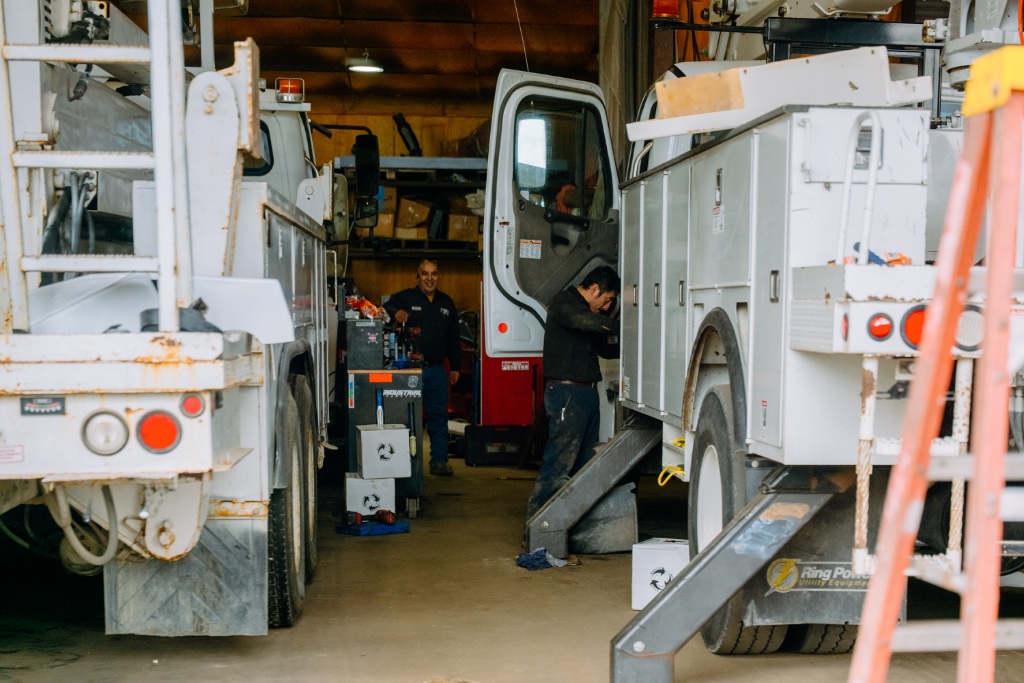
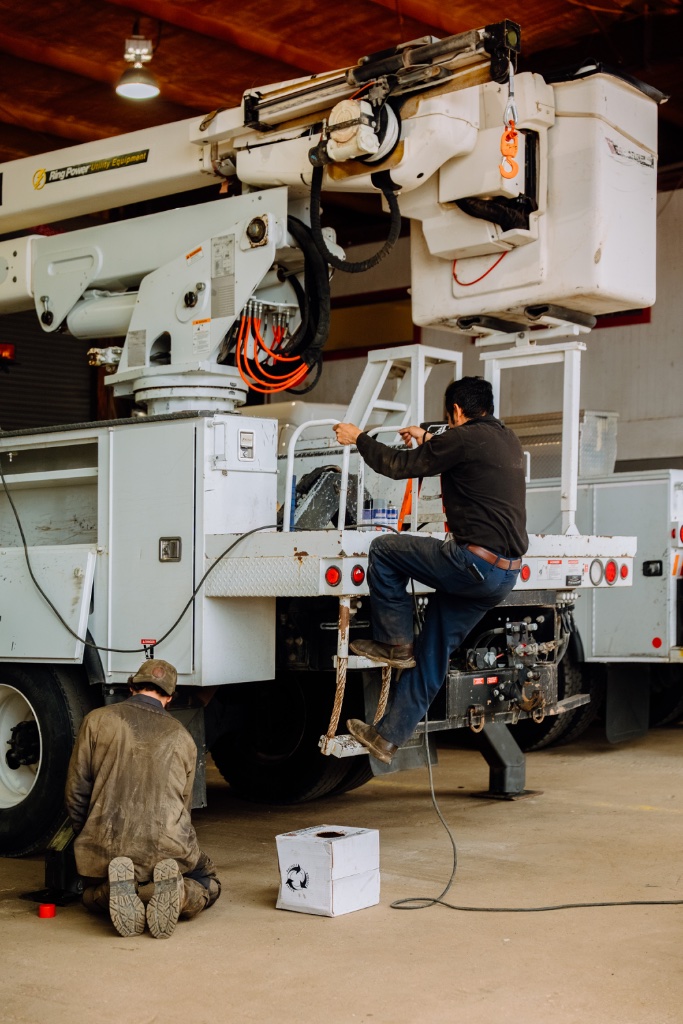
CRANETEC's mobile service model is built for the operational reality of contractor fleet maintenance in North Carolina: equipment is distributed across active job sites, staging yards, and contractor facilities across the state, and traditional shop-based maintenance requires vehicle transport that removes units from productive operation and adds logistics cost to every service event. Mobile service eliminates this friction — bringing the complete scope of preventive maintenance to the contractor's location.
For mobile fleet maintenance Charlotte and surrounding Mecklenburg County markets, CRANETEC serves contractor fleets operating in the state's largest commercial and utility construction market. Charlotte's sustained summer heat — the I-485 corridor regularly records among the highest urban heat island temperatures in the state — makes NC-adjusted preventive intervals particularly important for Charlotte-area contractor fleets. For complete Charlotte capabilities, see Charlotte, NC mobile fleet maintenance.
For mobile fleet maintenance Raleigh and the Research Triangle market, CRANETEC serves contractor fleets operating across Wake County, Durham, Cary, Chapel Hill, and Apex. The Triangle's rapid infrastructure growth, sustained construction activity, and significant utility expansion projects create consistent demand for mobile fleet maintenance that can reach equipment wherever it is deployed across the region. For complete Triangle market capabilities, see Raleigh, NC mobile fleet maintenance.
Across Greensboro, Winston-Salem, Durham, and the broader North Carolina market, CRANETEC provides statewide mobile fleet maintenance for contractor fleets of all sizes and equipment types. For complete information about all CRANETEC services, see the CRANETEC services page. To schedule mobile preventive maintenance for your North Carolina contractor fleet, contact CRANETEC directly.
Full metro including Concord, Gastonia, Huntersville.
Triangle — Durham, Cary, Chapel Hill, Apex.
Guilford County, High Point, I-85 corridor.
Durham County and Research Triangle Park corridor.
Western Wake County and I-40 corridor.
Forsyth County and Northwest Piedmont markets.